By: Neil Simmons | Follow me on Twitter / X: @NSimmz
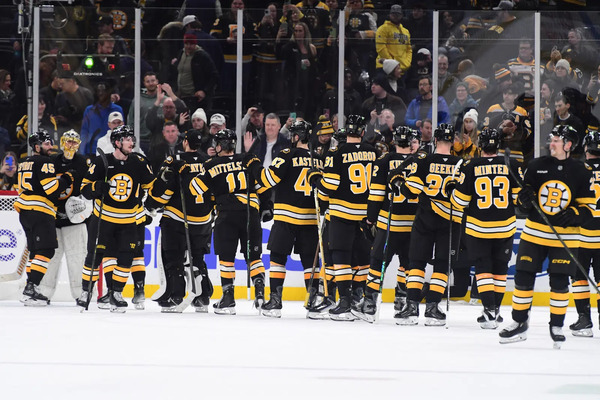
The 2025-26 Boston Bruins have been a tale of two teams. One team looks like the Bruins of old, wearing their opponents down with overwhelming physical play and going toe-to-toe with the NHL’s best. The other is a relapse of the previous season, struggling to stay competitive beneath a tidal wave of penalties. The most frustrating part has been the whiplash between the two, flipping from one to the other for long stretches and swinging the team’s outlook seemingly every week.
Boston entered the season with modest expectations after bottoming out in 2024-25, with a new coaching staff and several new players. A quick start highlighted by a road win over Washington, the top seed in the East last year, sparked early optimism that they could punch above their weight. But this optimism was short-lived, and the team showed that they were still very much a work in progress.
The Bruins followed up their hot start with six consecutive losses, plagued by the same self-inflicted wounds that haunted them last year. The defense looked lost and undisciplined, conceding at least four goals in five of the six losses, while the offense only came through when they were already dug into a hole. Meanwhile, the special teams nearly did a 180, with the power play coming to life during this stretch, but the penalty kill faltered, compounding their defensive mistakes.
By the time the Colorado Avalanche came to TD Garden in late October, the season already felt like it was drifting away, and another loss was inevitable. Instead, Boston tagged the Avs for their first regulation loss of the season, sparking a revival that saw the Bruins win eight of nine games. The defense stabilized, the offense kept humming, penalty discipline improved, and Boston climbed from second to last in the East all the way to the Atlantic Division lead. It began to appear as if the real Bruins had finally emerged, fully bought into Marco Sturm’s system and ready to contend for a playoff berth.
Just as soon as it looked like nobody could stop the Bruins, their old habits began to rear their head once again. Boston came back down to earth, dropping five of their next eight games. The goalscoring dried up, and the defense faltered under the weight of the league-high 15:52 of penalties per game the Bruins had taken during this stretch, constantly putting them on the back foot every single night. While not as disastrous a slump as before, it was enough to knock them out of the playoff race once again, and served as a reality check that a glaring roster flaw would handicap their success if it persisted.
Sure enough, once the Bruins cleaned up their discipline, the roller coaster swung back upward. With fewer penalties to kill, Boston won six of eight and climbed right back into a tie for the Atlantic Division lead. The offense found its rhythm, scoring at least four goals in five of the six wins, and the defense steadied with less time shorthanded. Heading home for a five-game homestand leading into the Christmas break, optimism could not have been higher for the Bruins. Making the playoffs had become less of wishful thinking and more of a legitimate possibility.
All of that optimism came crashing down in the blink of an eye as the Bruins hit their lowest point of the season. They dropped four of five during the Christmas-time homestand, and the collapse continued into the ensuing road trip. The discipline issues hit their absolute worst of the year, with Boston averaging 21 PIMs a night and giving eight of nine opponents at least four power plays per game. The penalty kill buckled under the constant pressure, and the offense could never get going to recover any ground. Once again, Boston fell out of the playoff picture, and attention began drifting towards the trade deadline and the draft.
Just as quickly as the sky once again seemed to be falling, the Bruins swung momentum back into their favor. Boston redeemed their earlier struggles on home ice by reeling off five straight wins at TD Garden, playing their best hockey of the season. The offense roared back to life, the defense tightened down with back-to-back shutouts to propel Boston back into the wild card, renewing the positivity they had lost just before the new year. Yet even in the midst of this latest winning streak, consistency on the penalty kill continued to elude the Bruins.
As volatile as Boston’s play has been over the first few months of the season, the one consistent aspect of their game is the correlation between penalties and performance: In the stretches where they’ve played well, they’ve more or less stayed out of the box or kept the penalties to a minimum. When their discipline has unraveled, their play has dropped, and they’ve paid for it in the loss column. Despite how frustrating it has been during their slumps, and as promising as they’ve looked on their hot streaks, everything still can, and has, flipped seemingly on a dime for this team.
The Bruins have been beneficiaries of an uncharacteristically congested Eastern Conference just as much as they’ve been victims of their own inconsistencies. As of Saturday, Boston holds the second wild card with 56 points, trailing Buffalo on a tiebreaker. Their grip on the position is tenuous at best, with several teams right behind them, holding games in hand and eager to kick the Bruins right back out of the playoff spot. If the Bruins can finally stabilize their play, they could very well stay in contention into March and April, but from what the season has taught us so far, the rollercoaster ride is far from over.
Looking to check out Boston Bruins’ games or other live events in person? Consider our partner StubHub for all your sports & concert ticketing needs HERE!



Leave a Reply