By: Camryn Meece | Follow me on Twitter / X @MeeceCamryn
For decades, National Hockey League goaltenders played without masks. The position was built on visibility and toughness, with an unspoken expectation that stopping pucks meant doing so barefaced.
That began to change in 1959, when Jacques Plante became the first NHL goaltender to regularly wear a mask after returning to a game following a facial injury that required stitches. His decision was met with immediate skepticism. Coaches questioned it, opponents mocked it, and many hockey fans around the country saw it less as protection and more as a sign that a goalie wasn’t tough enough.
Even within team leadership, resistance lingered. Coaches like Punch Imlach were openly skeptical of anything that might interfere with performance or challenge the traditional expectations of the position. Although Plante’s own coach, Toe Blake, eventually accepted the change, he was not initially supportive. The message across the league was clear: masks were not yet part of hockey’s identity. Even so, Plante’s decision marked a turning point in the evolution of the position.
By the 1960s, masks were no longer unheard of, but they were still far from standard. Some goalies used them, while others refused. Even among those who adopted them, the designs were simple—plain fiberglass shells meant for protection, not personality. Some were even homemade. The idea that a mask could represent anything beyond safety had not yet become part of hockey culture.
Gerry Cheevers entered the NHL during this transitional era. By the time he became the Boston Bruins’ starting goaltender, masks were becoming more common, but Cheevers did not view his as anything special. It was simply part of his equipment, something he put on before the puck dropped and forgot about once the game began.
For Cheevers, however, it remained just another piece of equipment until one moment during a Bruins practice changed how he viewed its purpose. During a Bruins practice, a shot struck Cheevers’ mask with enough force to send him from the ice. When he returned, he remarked that without the mask, the puck would have left him seriously injured.
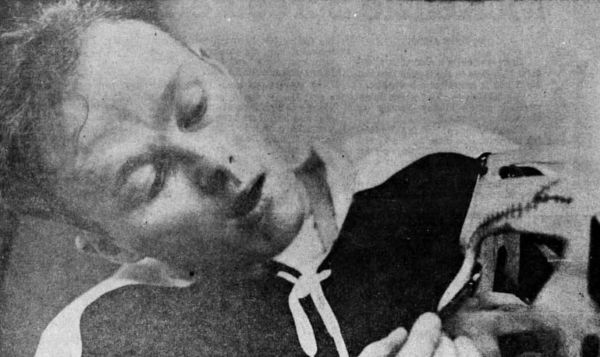
Bruins trainer John “Frosty” Forristall responded with a joke. Taking a marker, he drew a pair of stitched lines over the spot where the puck had hit, a visual gag suggesting the kind of wound the mask had prevented. Cheevers liked it immediately.
From that moment on, the idea stuck. Every time a puck struck his mask, Forristall added another set of stitches. What began as a single joke became a growing visual record of the punishment a goaltender absorbed over the course of a season.
In an era when most goalie masks were plain and forgettable, Cheevers’ wasn’t. Night after night, shot after shot, the stitched pattern grew until the mask itself became a symbol recognized far beyond Boston.
Around the league, it didn’t go unnoticed. Cheevers’ mask quickly became one of the most recognizable designs in hockey history, earning a reputation as one of the sport’s most iconic pieces of equipment.
Cheevers’ stitched mask also helped redefine what a goalie mask could be. Until then, most masks were little more than plain fiberglass shells designed solely for protection. While he wasn’t the first goaltender to personalize a mask, Cheevers demonstrated that it could become part of a player’s identity. His distinctive design stood out in an era when most goalie masks looked virtually identical, proving that equipment could also become a symbol.
In the decades that followed, NHL goaltenders embraced custom artwork, transforming their masks into canvases featuring team logos, hometown tributes, family symbols, and personal designs. Today, nearly every NHL goalie takes the ice wearing a mask that reflects who they are, a tradition that owes much to Gerry Cheevers and the unforgettable stitched mask he made famous in Boston.


Leave a Reply