By: Andrew Patten | Follow me on Twitter/X @a_patten11
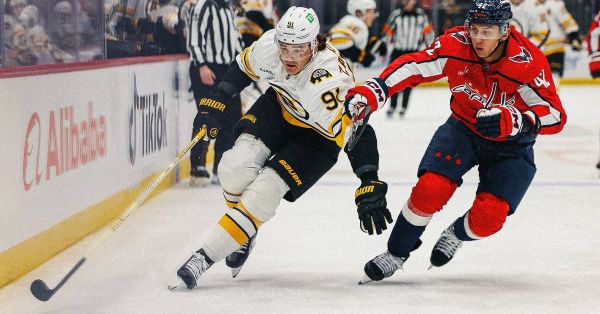
Preseason hockey has a unique way of testing fans’ heart rates across New England. A defensive lapse here, a broken sequence there, and suddenly the alarm bells start ringing. After Friday night’s 3-2 defeat to the Washington Capitals at Capital One Arena, some Boston Bruins fans may immediately fixate on special teams breakdowns and vent early-autumn frustration.
Before anyone reaches for the panic button regarding Boston’s penalty kill, take a deep breath and look at the bigger picture. In late September, preseason results—and particularly special teams stats—are notoriously deceiving. Here is why the penalty kill’s performance in D.C. is far from a cause for long-term concern.
The most critical detail to keep in mind when evaluating any September exhibition game this year is the fact that the Bruins have a new man in charge of the penalty kill. Matt McIlvane was added to Marco Sturm’s staff this offseason, replacing Jay Leach, who was tasked with running Boston’s P.K. It’s likely the structure will remain similar to stay in line with Sturm’s hybrid defensive philosophy. However, the little details that some may overlook are still being tweaked and worked on this time of year.
Penalty killing is fundamentally about cohesion, aggressive stick positioning, and instantaneous reads. It requires four skaters moving in total synchronization to clog passing lanes, disrupt zone entries, and clear rebounds. That level of operational chemistry takes game reps to rebuild after months away from competitive action.
Early in the preseason, players are still regaining game speed, refining their gap control, and dusting off their timing. A split-second delay in closing out a shooting lane or a missed assignment on a cross-seam pass looks glaring on the scorebook, but it is typically nothing more than typical September rust.
Boston’s penalty-killing identity isn’t defined by a single exhibition outing; it is anchored by proven, high-caliber personnel and a clear defensive structure. With core pieces like Charlie McAvoy, Elias Lindholm, Nikita Zadorov, Fraser Minten, and Mark Kastelic returning to anchor special teams rotations—alongside Jeremy Swayman in goal—the Bruins possess one of the most formidable penalty-killing backbones in the NHL.
In September, coaching staffs evaluate how players execute within the system rather than staring at the box score. Are penalty killers winning initial wall battles? Are they forcing entry dump-ins rather than clean possessions? Are defensive zone faceoff structures held?
Preseason penalty kills are heavily dictated by high power-play minutes, unpredictable referee calls, and stretched-out shifts designed to test conditioning. A few power-play goals allowed during an exhibition tune-up provide ideal video footage for Monday-morning teaching moments—which is precisely what coaching staffs want before the games actually count.
Exhibition hockey is meant to shake off rust, gather evaluation tape, and build conditioning. While allowing power-play conversions is never ideal, reading special-teams hiccups in September is a classic preseason trap. The Bruins have the veteran leadership, structural pedigree, and elite goaltending required to run a top-notch penalty kill once the National Hockey League’s regular season arrives. Save the concern for then, but for now, let the coaching staff do their work, let the players settle in, and let the process play out.


Leave a Reply